Kayak Anchor Failures & Fixes: A Real-World Troubleshooting Guide
Introduction
Anchoring a kayak securely is essential for safety, comfort, and successful fishing or photography sessions. This guide explains why anchors fail, how to identify the underlying causes, and which corrective actions restore reliable holding power. Readers will learn foundational concepts, practical deployment techniques, and product recommendations that address real‑world scenarios. By the end of the article, one will be equipped to choose the appropriate anchor system and avoid costly mishaps on the water.
Background/Context
Kayak anchors rely on weight, shape, and friction to resist drift caused by wind, current, and wave action. The most common designs are grapnel (four‑fluke) anchors, mushroom anchors, and modern folding models that combine compact storage with strong grip. Material selection—such as cast iron, carbon steel, or galvanized steel—affects durability in saltwater and freshwater environments. Understanding these fundamentals enables one to diagnose why an anchor may slip, become tangled, or fail to set properly.
Understanding Anchor Holding Power
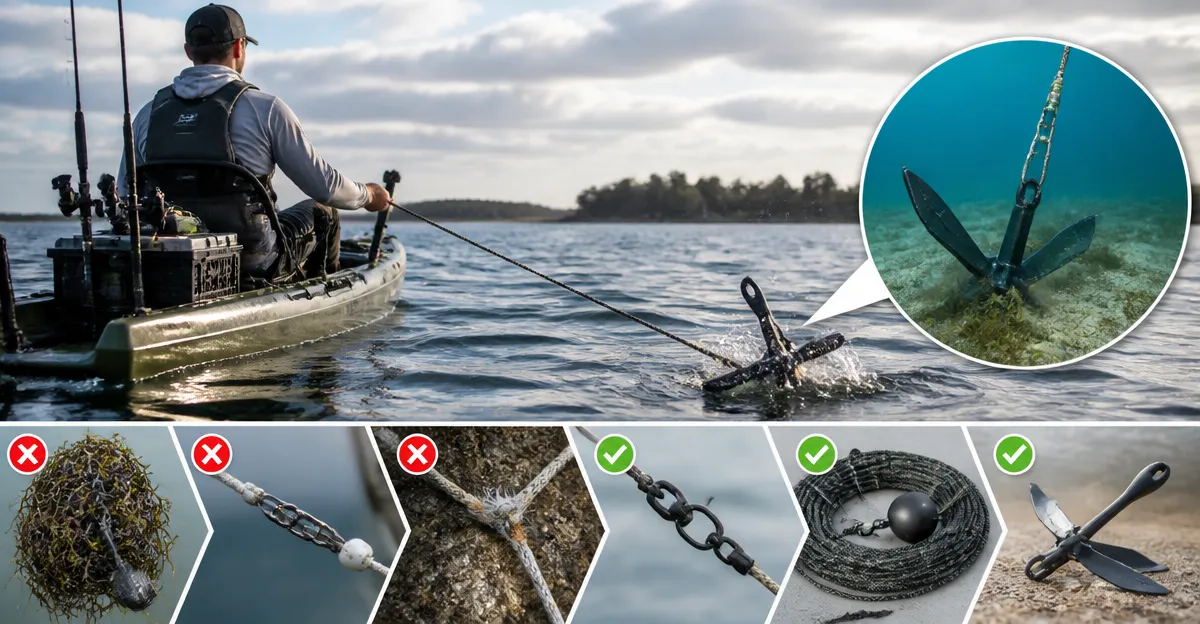
Holding power is a function of anchor weight, fluke surface area, and the ability of the flukes to embed in the bottom substrate. A 3.5 lb cast‑iron anchor with a four‑fluke design can generate several times its weight in holding force when the flukes bite into sand, mud, or weeds. The twist‑lock collar on many folding anchors ensures the flukes remain fully deployed, preventing premature collapse during retrieval.
Customer feedback shows that the Gradient Fitness Kayak Anchor holds well in windy lake conditions, even when paired with a short chain to increase leverage. Reviewers note that the heavy‑duty marine rope and floating buoy improve visibility and control, especially when the anchor is set on a soft, muddy bottom.
Selecting the Right Anchor Type
Choosing an anchor depends on vessel size, typical water conditions, and storage constraints. For small kayaks and paddle boards, a compact folding anchor under 2 lb provides sufficient holding power while minimizing weight. The BeGrit Folding Kayak Anchor weighs 1.5 lb and folds to 7 × 1.77 in, making it ideal for space‑limited setups.
When targeting larger kayaks, canoes, or inflatable boats that encounter stronger currents, a heavier 3.5 lb model such as the OULEME Folding Grapnel Anchor Kit offers enhanced grip without sacrificing portability. Its 40 ft marine‑grade rope and high‑visibility buoy add safety margins for offshore excursions.
Anchor Deployment Techniques
Proper deployment begins with selecting an appropriate anchoring spot free of large debris and with a suitable bottom composition. One should lower the anchor slowly, allowing the flukes to spread and embed before the rope is tensioned. The twist‑lock mechanism should be engaged by rotating the collar until it clicks, securing the flukes in the deployed position.
In windy conditions, adding a short length of chain (approximately 5 ft) between the anchor and the rope increases catenary, reducing the upward pull that can cause the anchor to break free. Several reviewers of the Gradient Fitness model reported that a modest chain addition dramatically improved holding performance in strong currents.
Integrating Anchor Trolleys
An anchor trolley allows a kayaker to adjust the angle of pull, positioning the vessel upstream or downstream of the anchor point. This capability enhances comfort while fishing and reduces strain on the anchor during variable wind shifts. The YakAttack Anchor Trolley Kit includes all necessary hardware for a straightforward installation and is praised for its durability and ease of use.
For a more comprehensive solution, the ISURE MARINE Anchor Trolley Kit provides a 21‑piece kit with a zig‑zag cleat, pulleys, and a 30 ft rope, allowing the line to double as a dock line when not in use. Users appreciate the seamless, flush‑mounted pulleys that keep the line tight and reduce snagging.
Maintenance and Troubleshooting
Regular inspection of the anchor, rope, and trolley components prevents unexpected failures. Look for corrosion on metal parts, frayed rope fibers, and worn twist‑lock collars. Rinse all components with fresh water after saltwater use and allow them to dry completely before storage.
If an anchor repeatedly fails to set, consider the bottom composition; a heavily vegetated or rocky bottom may require a heavier anchor or the addition of a chain to increase weight. Adjusting the rope length to provide sufficient scope—generally a 5:1 ratio of rope to depth—also improves holding power.
Comparison/Selection Guide
The table below summarizes key attributes of the five featured products, enabling readers to match their specific needs with the most suitable solution.
| Product | Weight | Rope Length | Included Extras | Price (USD) | Rating |
|---|---|---|---|---|---|
| Gradient Fitness Kayak Anchor | 3.5 lb | 25 ft | Floating buoy, stainless steel carabiner, storage bag | 31.99 | 4.7 (4,444 reviews) |
| YakAttack Anchor Trolley Kit | Not applicable (trolley only) | Included hardware only | All mounting hardware | 37.95 | 4.7 (795 reviews) |
| BeGrit Folding Kayak Anchor | 1.5 lb | 10 m (≈33 ft) | Buoy ball, storage bag | 18.59 | 4.5 (1,119 reviews) |
| OULEME Folding Grapnel Anchor Kit | 1.5 lb / 3.5 lb options | 40 ft | Buoy, snap hook, padded bag | 21.99 | 4.8 (80 reviews) |
| ISURE MARINE Anchor Trolley Kit | Not applicable (trolley only) | 30 ft | Zig‑zag cleat, pulleys, rigging ring, carabiners | 16.19 | 4.5 (271 reviews) |
Best Practices & Tips
Implementing the following practices reduces the likelihood of anchor failure and extends the lifespan of equipment:
- Always carry a short length of chain to increase holding weight and reduce rope angle.
- Use a high‑visibility buoy to locate the anchor quickly, especially in low‑light conditions.
- Maintain a rope scope of at least 5:1; for a 10 ft depth, deploy 50 ft of rope.
- Inspect the twist‑lock collar before each outing; a loose collar can cause fluke collapse.
- Store anchors in a padded bag away from direct sunlight to prevent metal fatigue.
Frequently Asked Questions
1. How heavy should an anchor be for a 12‑ft kayak?
A 3.5 lb folding grapnel anchor, such as the Gradient Fitness model, provides ample holding power for a 12‑ft kayak in moderate wind and current. Adding a 5‑ft chain can further improve performance in stronger conditions.
2. Can a folding anchor be used in saltwater without corrosion?
Both the Gradient Fitness and OULEME anchors are constructed from cast iron or galvanized carbon steel, which are resistant to rust when rinsed with fresh water after each saltwater use.
3. What is the advantage of an anchor trolley over a fixed anchor line?
An anchor trolley enables the kayaker to adjust the angle of pull, allowing the vessel to face upstream or downstream as desired. This flexibility reduces strain on the anchor and improves comfort during extended fishing sessions.
4. How often should the rope be replaced?
Marine‑grade polyethylene rope should be inspected for fraying or UV damage at least every three months. Replace the rope when any fibers appear worn or when the rope no longer holds a firm knot.
5. Is it necessary to use a buoy with every anchor?
A buoy greatly enhances safety by marking the anchor’s location, especially in low‑visibility conditions or when multiple kayakers are on the water. All featured kits include a buoy for this reason.
Conclusion
Understanding the mechanics of anchor holding, selecting the appropriate weight and design, and employing correct deployment techniques prevent most anchor failures. Integrating a well‑designed trolley system further improves control and comfort. By following the maintenance schedule and best‑practice tips outlined above, one can enjoy stable, worry‑free outings on lakes, rivers, and coastal waters.
Products Featured in This Guide
Gradient Fitness Kayak Anchor
Price: $31.99 – Rating: 4.7/5 (4,444 reviews)
Featured for its 3.5 lb cast‑iron body, 4‑fluke design, and complete all‑in‑one kit that performs well in sand, silt, and rocky bottoms.
YakAttack Anchor Trolley Kit
Price: $37.95 – Rating: 4.7/5 (795 reviews)
Featured for its easy‑install hardware and robust design that allows kayakers to reposition their vessel while anchored.
BeGrit Folding Kayak Anchor
Price: $18.59 – Rating: 4.5/5 (1,119 reviews)
Featured for its ultra‑compact 1.5 lb design, galvanized carbon steel construction, and complete accessory kit for small watercraft.
OULEME Folding Grapnel Anchor Kit
Price: $21.99 – Rating: 4.8/5 (80 reviews)
Featured for its dual‑weight options (1.5 lb and 3.5 lb), 40 ft marine‑grade rope, and high‑visibility buoy, suitable for a range of small watercraft.
ISURE MARINE Anchor Trolley Kit
Price: $16.19 – Rating: 4.5/5 (271 reviews)
Featured for its comprehensive 21‑piece kit, including a zig‑zag cleat and pulleys that double as a dock line, offering versatile anchoring solutions.